How to Eliminate Delay and Scale Your Media Buying with Structured Logic


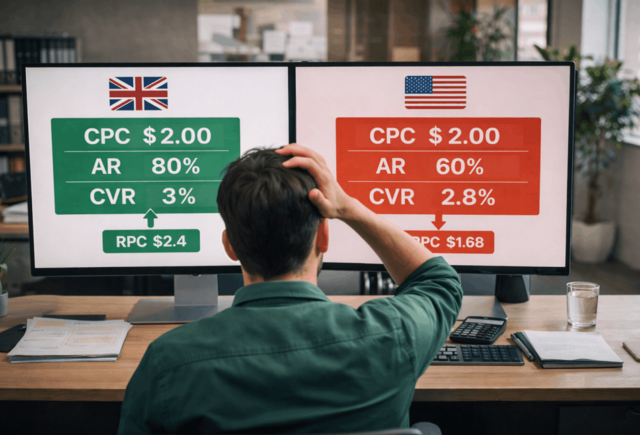
The scaling issue in performance marketing is not about finding the winners. It’s about being quicker to the signal than the market. Most media buyers don’t struggle because they’re not good at it. Most media buyers struggle because they’re slow. In a performance marketing world, mistakes compound much slower than delays.
The Illusion of Discipline
A typical process that exists within many accounts:
Open the tracker dashboard
Check CPA against payout
Check approval rate via affiliate reporting
Cross-check spend via ad platform
Make adjustments manually….
Repeat the cycle every few hours
The above process appears organized. Structured. Even data-driven. In truth, it’s a reactive process.
With each manual check, there’s a lag. Sometimes two hours. Sometimes half a day. In the meantime, the competition is scaling into profitable areas, whereas you’re stuck validating if it’s safe to do so. It’s not a matter of work. It’s a matter of architecture.
Where the Real Bottleneck Lives
Most trackers are made to show performance data. They aren’t made to execute the decisions made on that data. Therefore, scaling logic is often not within the system:
In threads on Slack about thresholds for different buyers
In SOPs, each buyer has their own interpretation
In spreadsheets, each maintained by one person
In the head of the person on the team with the most experience
When the rules aren’t formal, execution isn’t consistent.
There are two different buyers, each with slightly different thresholds. The budget increases based on intuition, not data. The losing campaigns stay live longer than they should because there isn’t a system to force the opposite. At small spend, this isn’t a problem. At large spend, it becomes costly. Eventually, the account spend becomes the speed at which humans can refresh the dashboards.
What Structured Decision Logic Looks Like
High-performing teams set conditions beforehand and let the systems indicate action points. Instead of constantly wondering, “How is this campaign performing?”, high-performing teams set logic like this:
If the margin falls below a certain percentage for a set period, alert us.
If the CPA remains below a target for a set number of conversions, increase the budget by a set amount.
If the approval rate moves beyond a set band, flag it for examination.
This changes the monitoring from constant to conditional. This eliminates emotional response and condenses response time. Decisions are no longer made on the fly. The system does the signal detection. We do the interpretation.
Why Reaction Speed Determines Stability
In competitive auctions, profitable windows are closed quickly. Algorithms respond accordingly. Bids move. Inventory changes.Slow accounts don’t just lose opportunities. They lose value longer than they should.
The difference between stable and volatile performance is not necessarily about creativity in art or ingenuity in targeting. It is about speed of response. Speed of response is about whether or not scaling logic is inside humans or inside systems.
In systems, execution is consistent. Consistency is predictable. Predictability is what gets things compounded. Speed in performance marketing is not about operational ease. It is about structural superiority.
The Bottom Line
Manual monitoring has the effect of introducing delay, and delay has a direct effect on profitability in fast-moving auctions. When the scaling logic is based on humans and not machines, execution is inconsistent, and the reaction time is slower. Decision rules based on predetermined rules help to compress reaction time, eliminate bias, and provide stability. If your scaling process is based on periodic dashboard reviews, your growth potential is limited by the reaction time of humans.