What is Adtech? Process, Profitability, and Key Ad Tech Companies Explained

What is Adtech?
Adtech (short for ‘advertising technology’) is basically the system that determines the ads you’re shown, where you’re shown them, and for what reasons.
If you’ve ever been curious about what is adtech, think like this:
Each time you visit a website or app, a procedure is going on behind the scenes to figure out which ad you’ll be shown in a matter of seconds.
Ad tech can do things like:
Select the right ad for the right person
Determine the price for the ad space
Show the ad immediately
Monitor whether you bought anything or clicked on the ad
All this is done automatically without humans making the decisions.
Without Adtech, businesses would have to manually pick where their ads appear, which would be a long and expensive process.
How Adtech Works: The Process
Understanding what is adtech requires breaking down its workflow:
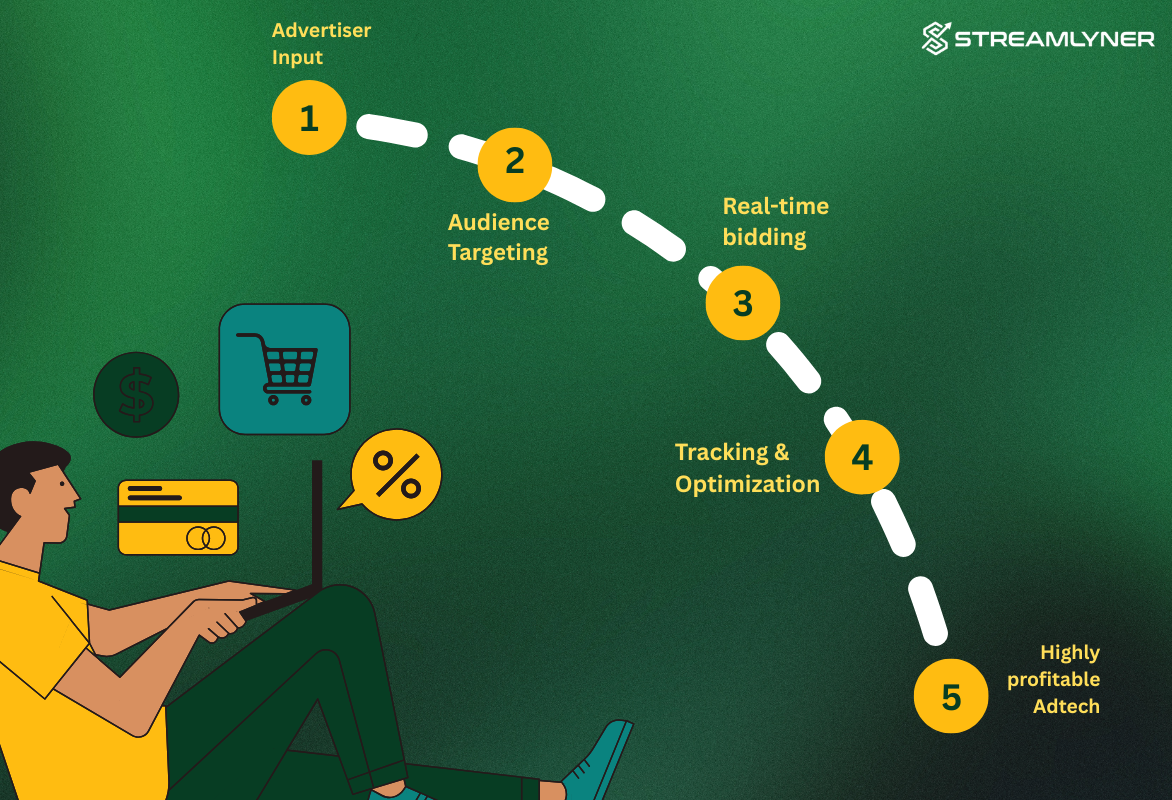
1. Advertiser Input
Advertisers set the goals, budget, and target audience within Ad tech platforms, such as a DSP.
2. Audience Targeting
Ad tech platforms use data to target the right audience based on behavior, demographic, and intent data.
3. Real-Time Bidding (RTB)
When a user requests a webpage, Ad tech platforms hold an ad auction in real-time. This ad auction process is done in milliseconds.
4. Ad Delivery
The winning ad is delivered through Ad tech platforms, ensuring that the ad is served to the right user.
5. Tracking and Optimization
Ad tech platforms track and optimize ads, including impressions, clicks, conversions, and ROI, automatically.
This Ad tech process is repeated billions of times a day.
Profitability of Adtech
Adtech is highly profitable because it scales efficiently and operates on data-driven margins.
Key revenue models:
Media arbitrage:Leveraging Low-Cost Traffic and Higher Monetization
Platform fees: A Cut of Every Transaction for DSPs, SSPs, and Exchanges
Data monetization:Selling Audience Understanding and Targeting Capabilities
Why Adtech is profitable?
Automation reduces human cost
Real-time optimization increases ROI
Massive volume enables compounding returns
However, profitability depends heavily on infrastructure efficiency. Poorly optimized Ad tech systems lead to wasted spend, latency, and tracking inaccuracies.
Key Ad Tech Companies
The Adtech ecosystem is dominated by a mix of global giants and specialized infrastructure providers.
Major Players:
Google Marketing Platform
The Trade Desk
Amazon Advertising
Meta Ads
These companies control large portions of the Ad tech pipeline, from demand to delivery.
Infrastructure and Custom Adtech Systems
Apart from this, a growing part of Ad tech today is built on custom infrastructure designed specifically for performance marketing teams.
What performance teams actually need is:
Reliable tracking of clicks, conversions, and events
Lead management systems
Clean data pipelines across multiple ad platforms
Integrations that connect everything together
This is the side of Ad tech that directly impacts performance.
Streamlyner builds these kinds of systems. Think of tools similar to RedTrack, but custom-built based on how a specific team operates.
Instead of using fixed software, teams get a tailored Ad tech setup that connects platforms like Meta, tracks data accurately, and gives them full control over how their campaigns are measured and optimized.
This distinction matters because better infrastructure here often leads to better decisions, and ultimately, better profitability.
Final Take
Adtech is not just a piece of software; it is a fast-moving data-driven ecosystem that underpins the global advertising economy. From automated bidding to bespoke infrastructure, adtech drives the efficiency with which money is converted into hard results.
But in a competitive world, control over your adtech stack is where the real advantage lies.