The Mechanics of Call Routing

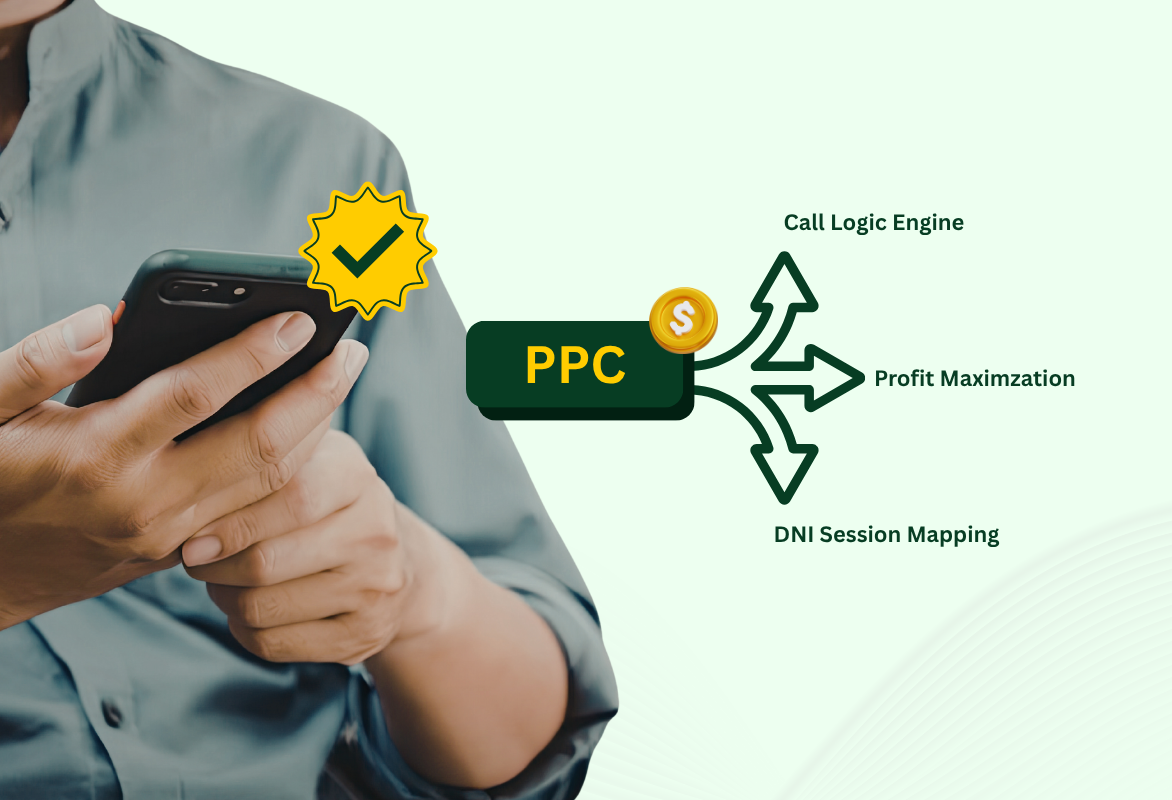
The phone rings. In the performance marketing space, that sound is the ultimate dopamine hit. It means a high-intent prospect is on the line, actively looking for a roofer, a plumber, or a Medicare plan.
For a lot of media buyers, the strategy ends right there. They slap a static toll-free number on a landing page, set up a basic forwarding rule to their buyer’s call center, and cross their fingers.
But treating phone calls like a simple game of connect-the-dots is a guaranteed way to bleed margin. The moment that call connects, a massive, invisible technical disconnect occurs. The digital trail goes completely cold. If you don't control the split-second routing logic that happens before the first dial tone, you lose attribution, you lose control over your buyer queue, and you leave money on the table.
If you want to scale a pay-per-call operation and actually maximize the ROI of every single ring, you have to pull back the curtain on the telecom plumbing. Here is how you upgrade from basic forwarding to a true, revenue-generating switchboard.
The Blind Spot: The Offline Attribution Gap
The biggest headache in pay-per-call is the disconnect between the digital click and the analog conversation.
If a user fills out a web form, your pixel fires seamlessly. But when a user picks up the phone, the digital trail goes cold. You knowsomeonecalled, but you don't know if they came from your broad match "roofing near me" keyword, your expensive retargeting ad, or an organic Facebook post.
The Mechanic: Dynamic Number Insertion (DNI)
To bridge this gap, you need infrastructure that ties the physical ring back to the digital click.
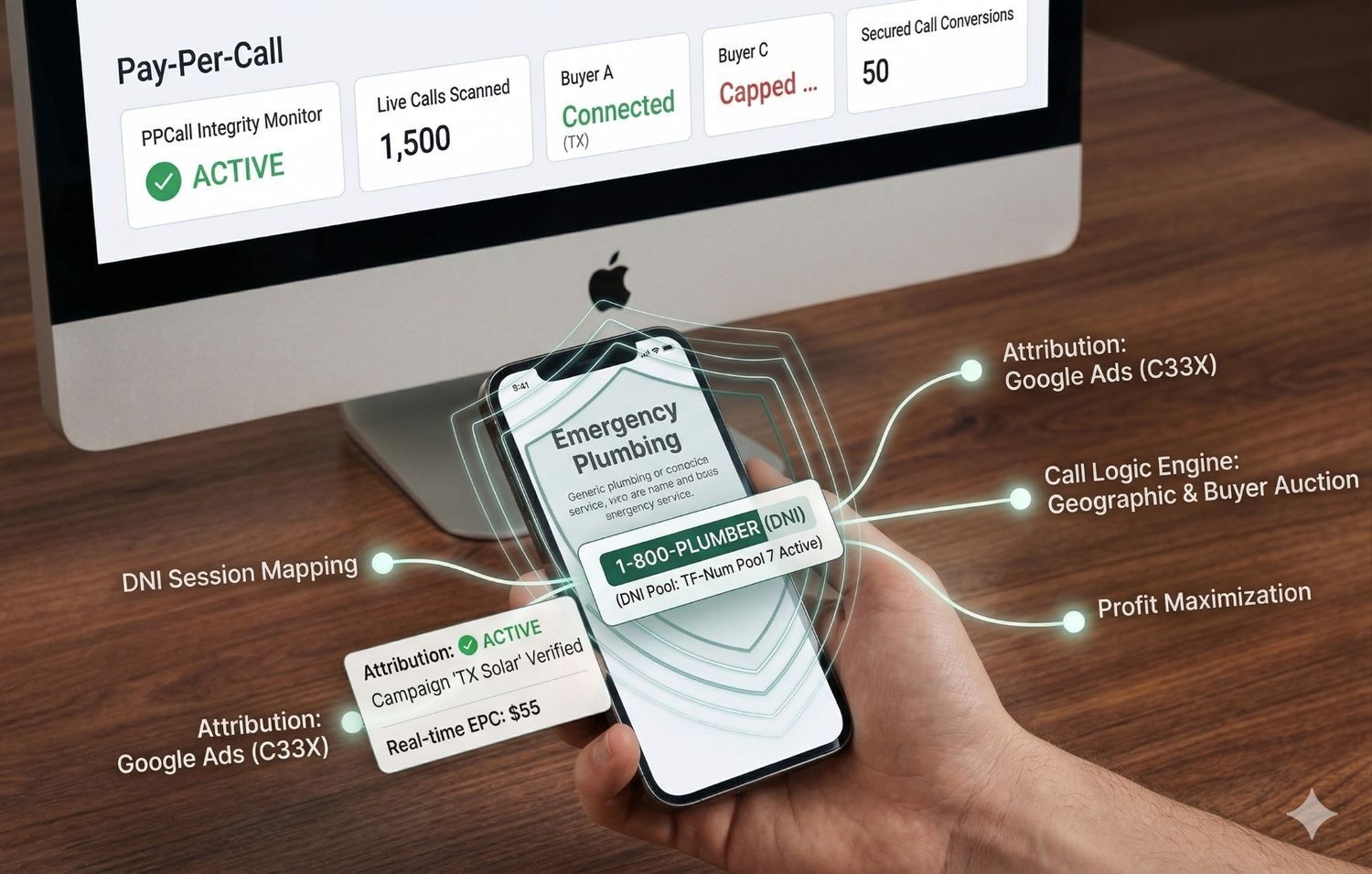
Instead of hardcoding a single toll-free number on your landing page, a custom script dynamically pulls from a number pool to swap out the phone number based on the user's unique session data. When the user calls that specific, temporary number, your system instantly maps the call back to the exact ad creative, keyword, and campaign that drove it.
You then fire that conversion data back to Google or Facebook via offline conversion APIs. Your ad platform finally gets the feedback it needs to optimize for actual phone calls, not just landing page views.
The Engine: The Split-Second Auction
Let’s talk about your buyers. You probably have three or four different roofing companies buying calls from you. Buyer A pays $40 per call, Buyer B pays $55, and Buyer C pays $60 but only wants calls from specific zip codes.
If you just round-robin your calls sending Call 1 to Buyer A, Call 2 to Buyer B you are actively losing money.
The Mechanic: Programmatic Call Routing
When that phone rings, your backend architecture should execute a complex, real-time logic puzzle before the caller even hears the first dial tone. A custom-built logic engine evaluates the caller and your buyers instantly:
Geolocation:The system checks the caller's area code. If they are in Texas, and Buyer C pays a premium for Texas, the call goes to the top of Buyer C's queue.
Concurrency & Caps:What if Buyer C is already on the phone? A basic setup drops the call or sends it to voicemail, wasting your ad spend. An intelligent routing system checksconcurrency(who is available right now) anddaily caps(who hasn't reached their budget limit). If Buyer C is busy, the system instantly routes the call to Buyer B.
Real-Time EPC (Earnings Per Click):The system calculates which available buyer will yield the highest payout for this specific second in time, ensuring every connection maximizes your margin.
The Bouncer: Protecting Your Premium Buyers
Lead buyers pay top dollar for calls because they expect hot, ready-to-buy prospects. They donotwant to pay your $60 fee to talk to someone asking for directions, looking for a job, or trying to sell them software.
If you flood your buyers with low-intent junk calls, they will dispute the charges and cancel your insertion orders.
The Mechanic: Custom IVRs and Telecom APIs
To protect your buyers (and your reputation), you need a bouncer at the door.
By integrating heavy-lifting telecom APIs like Retreaver or Ringba into your tech stack, you can program custom Interactive Voice Response (IVR) systems.
Before the caller ever reaches your premium buyer, they hear a prompt:"Press 1 if you are a homeowner looking for a roof repair quote. Press 2 if you are an existing customer."
If they press 2, the system hangs up or routes them to a dead-end, saving your buyer's time and ensuring you only pass through billable, high-intent traffic. You filter out the noise programmatically.
Stop Forwarding, Start Routing
Pay-per-call is not a passive game. If you are relying on off-the-shelf trackers or simple forwarding rules, you are giving away the control that dictates your profitability.
A ringing phone is an asset, but therouting architectureis the business.
Upgrading to a custom-built infrastructure allows you to attribute every click, maximize the payout of every second, and protect your buyer relationships with ruthless efficiency. Don't just let the phone ring, control where the money flows.