Attribution Models Beyond Last-Click and How They Distort ROI

Many performance marketing teams still rely on last-click attribution, a system which gives all the credit to the final step before a customer buys.
It’s simple, but not accurate.
It ignores everything that happened before. This makes some channels look better than they really are, and others look useless, even when they helped a lot. As a result, ROI gets misjudged and marketing budgets get misused.
The Problem with Last-Click Attribution
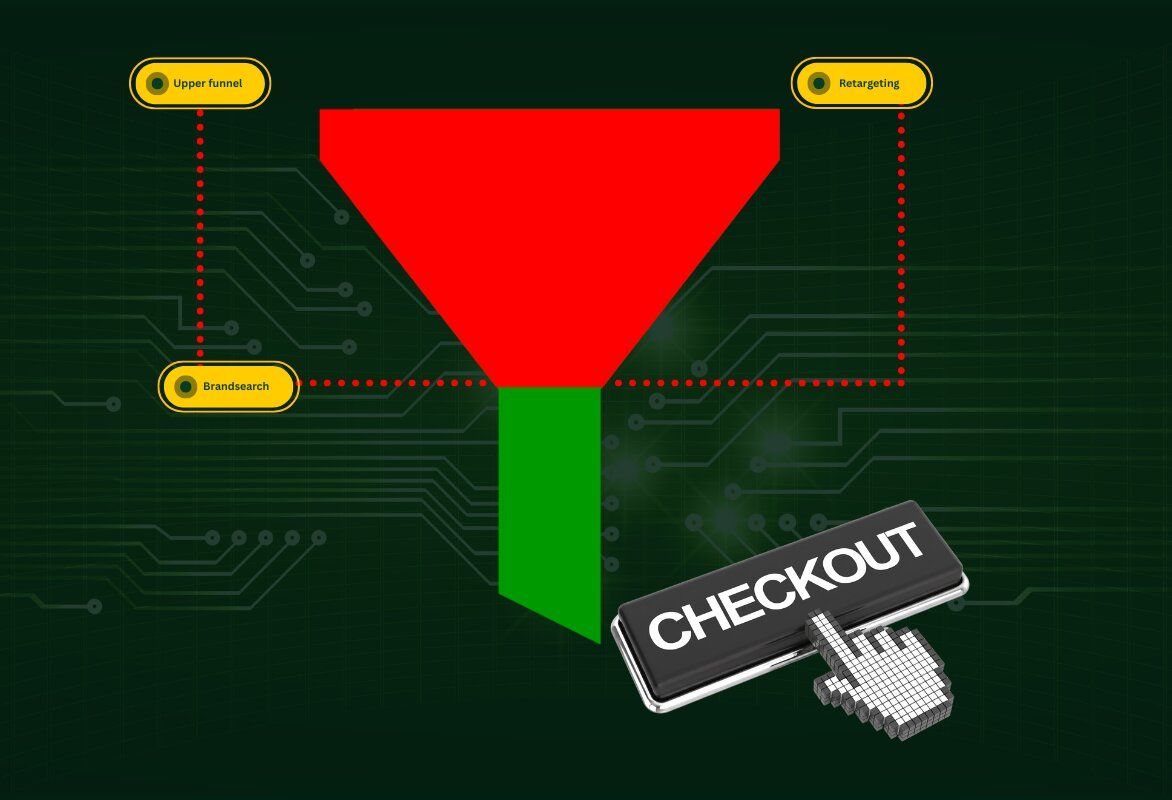
Last-click gives 100% credit to the final touchpoint before conversion. That means:
Upper-funnel channels look useless
Retargeting looks like a hero
Brand search appears to drive everything
In reality, you’re over-investing in bottom-funnel tactics while underfunding demand generation.
What Happens to ROI?
Your ROI becomes artificially inflated in some channels and brutally undervalued in others. This leads to:
Misallocated budgets
Poor scaling decisions
Channel cannibalization
You’re not optimizing performance. You’re optimizing a flawed measurement system.
Attribution Models Other Than Last-Click
Linear Attribution
Distributes credit equally across all touchpoints.
Pros: Balanced view
Cons: Ignores impact differences
Good starting point, but too simplistic for serious scaling.
Time Decay Attribution
Gives more credit to touchpoints closer to conversion.
Pros: Reflects recency influence
Cons: Still undervalues early discovery
Better than last-click, but still biased toward lower funnel.
Position-Based (U-Shaped)
Assigns more weight to first and last interactions.
Pros: Highlights acquisition and conversion
Cons: Middle touchpoints get diluted
Useful for teams investing in both awareness and conversion.
Data-Driven Attribution (DDA)
Uses algorithms to assign credit based on actual contribution.
Pros: Closest to reality
Cons: Requires clean data and volume
This is where serious performance teams should be heading.
How These Models Still Distort ROI
Even advanced models aren’t perfect:
Platform Bias: Google, Meta, etc. favor their own ecosystems
Tracking Gaps: Cookie loss, iOS privacy changes
Walled Gardens: Limited cross-platform visibility
So, while DDA is better, it’s still not truth. It’s just less wrong.
The Real Issue: Fragmented Measurement
Most teams run attribution inside ad platforms or basic analytics tools. That creates:
Siloed data
Inconsistent logic
No unified customer journey
You’re stitching together partial truths and calling it insight.
What Performance Teams Actually Need
If you’re serious about ROI clarity, you need:
Cross-channel attribution modelling
Server-side tracking and first-party data ownership
Custom logic aligned to your funnel, not platform defaults
Unified reporting layer across paid, organic, and CRM data
This is where generic tools break.
If this is the level you’re aiming for, Streamlyner builds fully tailored systems around your exact funnel, data, and logic, not generic tool limitations.
Why AdTech Needs to Be Custom
Off-the-shelf attribution tools are built for averages. Your business isn’t average.
A custom adtech stack lets you:
Define your own attribution logic
Track full-funnel journeys accurately
Eliminate platform bias
Own your data instead of renting it
This is especially critical for agencies and performance teams managing scale.
Final Take
Last-click attribution isn’t just outdated. It actively distorts your ROI and misguides your growth strategy.
Moving beyond it isn’t optional anymore. But switching models alone isn’t enough. Without proper infrastructure, you’re just upgrading the illusion.
If your decisions depend on attribution, then your attribution system needs to be something you control.