Why Marketers Must Adopt The Delayed FCC 1:1 Consent Rule

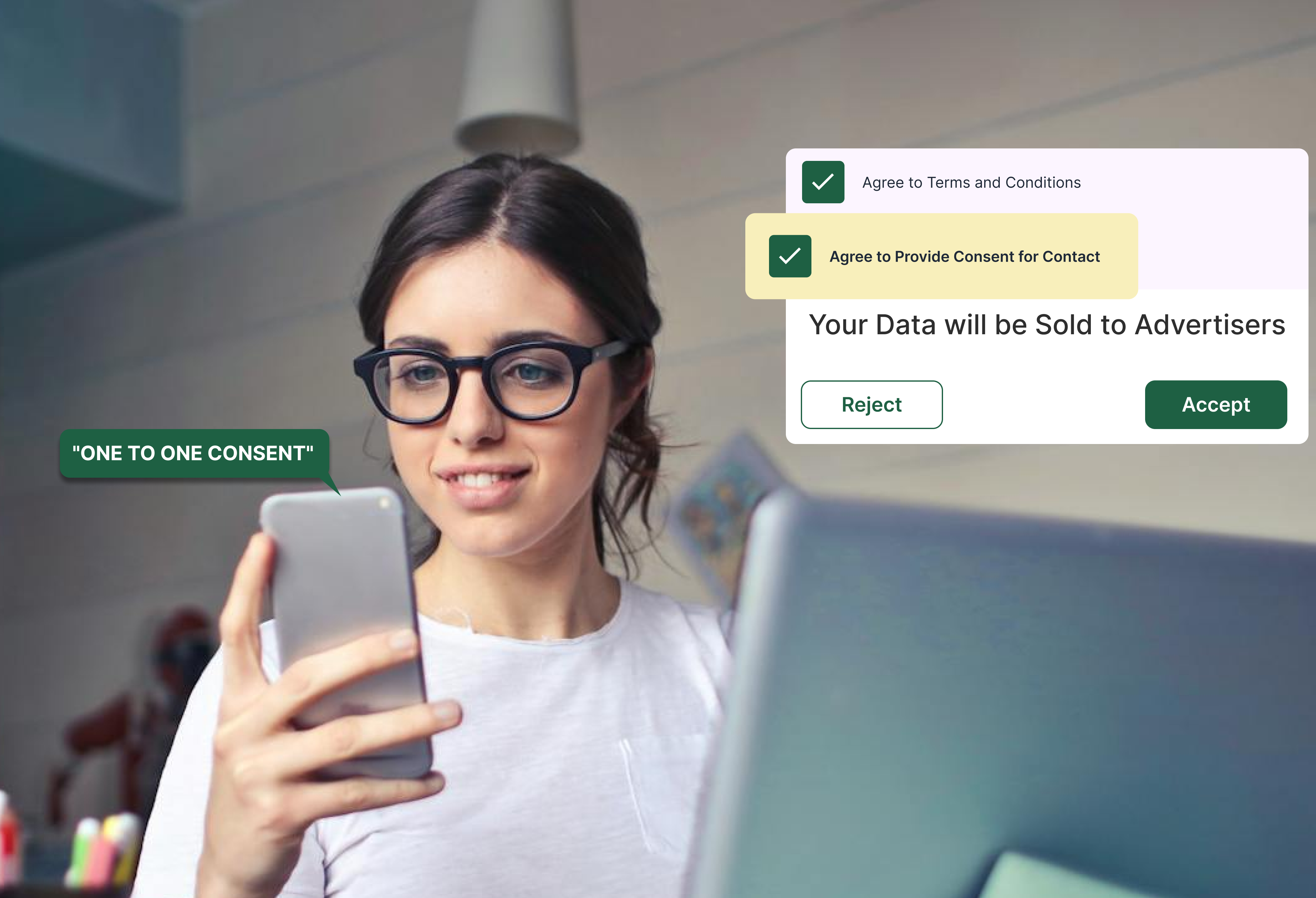
Remember the collective anxiety of late January 2025? Performance marketers, lead buyers, and affiliate networks were bracing themselves. The Federal Communications Commission (FCC) was preparing to enact its newone-to-one consent rule, a mandate designed to completely phase out the traditional "bundled" lead generation model.
Then, in a plot twist worthy of a legal thriller, the courts intervened at the literal last minute and put the whole thing on ice. Cue the massive sigh of relief from lead generators everywhere.
But before we pop the champagne and go back to business as usual, it’s worth taking a step back. While the federal mandate was legally halted, the market forces that inspired it haven't slowed down one bit. Here is a breakdown of what the rule actually proposed, why it was delayed, and most importantly why forward-thinking marketers are voluntarily shifting to 1:1 consent anyway.
The Backstory: What Was the FCC Trying to Do?
If you work in lead generation, you are familiar with the standard setup: A user fills out a form, checks a small box that says,“I agree to be contacted by our marketing partners,”and suddenly, that single lead is sold to several different advertisers. The advertisers claim compliance because the user technically agreed to the terms and conditions on the landing page.
The FCC wanted to close this "bundled consent" loophole. Under their proposed rule:
A landing page could still feature multiple advertisers, but the user would have to actively and individually check a box foreach specific brandthey wanted to hear from.
Relying on a hidden hyperlink that lists hundreds of "partner companies" would no longer protect businesses from Telephone Consumer Protection Act (TCPA) fines.
The 11th-Hour Plot Twist
The rule was officially slated to go live onJanuary 27, 2025. However, on Friday, January 24th, just one business day before the deadline, the Eleventh Circuit Court of Appeals struck the rule down, and the FCC formally postponed it.
Why the sudden reversal? The court essentially ruled that the FCC had overstepped its statutory boundaries. Under the law, Congress only required a consumer to voluntarily agree to receive communications; they never explicitly mandated granular, "one-to-one" consent.
The result:The mandate was vacated. Legally speaking, the traditional bundled consent model remains technically viable under federal law. But functionally speaking? Relying on it is becoming a highly risky strategy.
Why You Should Make the Switch to 1:1 Consent Anyway
Even though the specific 1:1 mandate died in court, thespiritof the rule has already reshaped performance marketing. Clinging to bundled consent might be legal for now, but it's increasingly bad for business. Here is why you should consider adopting the 1:1 framework voluntarily:
1. Shared Leads Can Drain Your BudgetLet’s be honest: when a consumer checks a bundled box and subsequently receives calls from eight different insurance providers in an hour, their intent drops to zero. They get overwhelmed, stop answering the phone, and nobody gets the sale. Granular, 1:1 consent ensures that when your sales team dials a lead, that consumer actually knows who you are and specifically asked to speak withyou. While your initial Cost Per Lead (CPL) might rise, your Cost Per Acquisition (CPA) will likely drop because close rates on exclusive, 1:1 leads are significantly higher.
2. Telecom Carriers Are the Real GatekeepersYou don't just have to answer to the government; you have to keep the major telecom carriers happy. AT&T, T-Mobile, and Verizon heavily filter network traffic, and they increasingly view bundled-consent SMS campaigns as spam. If the carriers decide to block your texts or flag your numbers as "Scam Likely," a favorable court ruling won't save your campaign.
3. The New Revocation Rules Are Very RealWhile the 1:1 rule was delayed, the FCCdidsuccessfully implement strict new Consent Revocation rules in April 2025. You now have a strict 10-day window to process opt-outs and "STOP" requests across any channel. If you are buying bundled leads from a massive network, tracking and honoring immediate revocations across a tangled web of third-party buyers is an operational headache. 1:1 consent creates a clean, direct data trail that makes compliance much easier to manage.
4. State Laws Are LoomingJust because a federal rule was paused doesn't mean state legislatures are sitting idle. States frequently introduce their own aggressive telemarketing laws when federal regulations stall. Moving to a 1:1 model is a great way to future-proof your business against an unpredictable patchwork of state-level regulations.
How to Pivot Your Funnel
The era of relying entirely on high-volume, low-intent shared leads is winding down. To stay ahead of the curve, proactive marketers should focus on a few key areas:
Audit Your Lead Partners:Take a closer look at your lead vendors. If an aggregator cannot provide proof of a direct, high-intent opt-in specifically for your brand, it might be time to renegotiate your buying criteria.
Rethink Your Forms:Consider moving away from pre-checked or bundled consent boxes. If you run a comparison site that routes leads to multiple buyers, build out multi-select interfaces that empower users to choose the specific brands they want to connect with.
Focus on UX:Better compliance requires better user experience. You need landing pages that convert highly because of a great offer, not because the consent terms were hidden in the footer.
If you are looking to seamlessly restructure your funnels to maintain high conversion rates while transitioning to a transparent, high-intent 1:1 consent model,Streamlynerprovides personalized software and funnel development services tailored for modern compliance. We help you build the infrastructure to capture high-quality leads safely and effectively.
The Bottom Line
Ultimately, the goal of performance marketing is to connect a high-intent buyer with a great product. While the courts may have given bundled consent a temporary reprieve, consumer expectations have already evolved.
By giving users the explicit right to approve data sharing for specific brands, you are doing more than just playing it safe, you are generating better leads. Your legal team will appreciate the clean data trail, your sales team will appreciate the higher close rates, and your customers will appreciate the transparency. It really is a win-win.